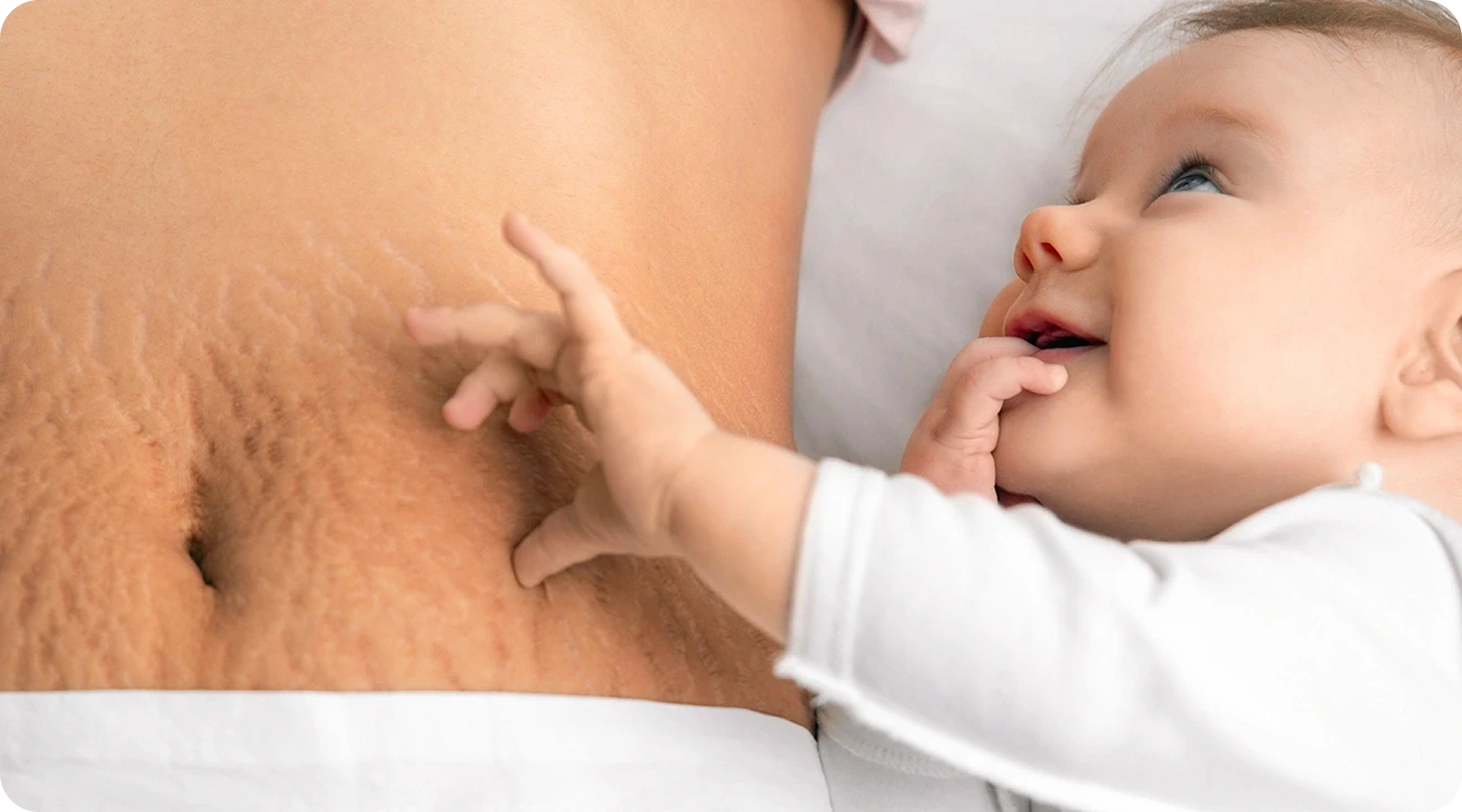
Stretch marks after pregnancy are extremely common. In fact, up to 90 percent of moms develop them during or after birth. But most advice still focuses on expensive creams and unrealistic promises that rarely make a real difference. By combining movement, nutrition, timing, and a private postnatal fitness program, you can fade the appearance of stretch marks, improve skin tone, and feel confident in your body again.
Let’s make something clear. You cannot erase stretch marks completely. But you can fade their appearance, improve skin tone, and feel confident again. Especially when you follow the right strategy with movement, nutrition, and timing.
This evidence-based guide breaks it down by stage, so you know what’s possible and what actually works.
What Are Stretch Marks — and Why Do They Happen?
Stretch marks, also called striae distensae, are small tears in the dermis (the deeper layer of skin). They appear when the skin stretches too quickly, most commonly during:
- Pregnancy (the number one cause in women)
- Rapid weight gain
- Hormonal shifts postpartum or during puberty During pregnancy, your belly grows faster than your skin can adapt. This puts tension on your collagen and elastin fibers, and once those fibers rupture, stretch marks begin to form.
The 3 Stages of Stretch Marks
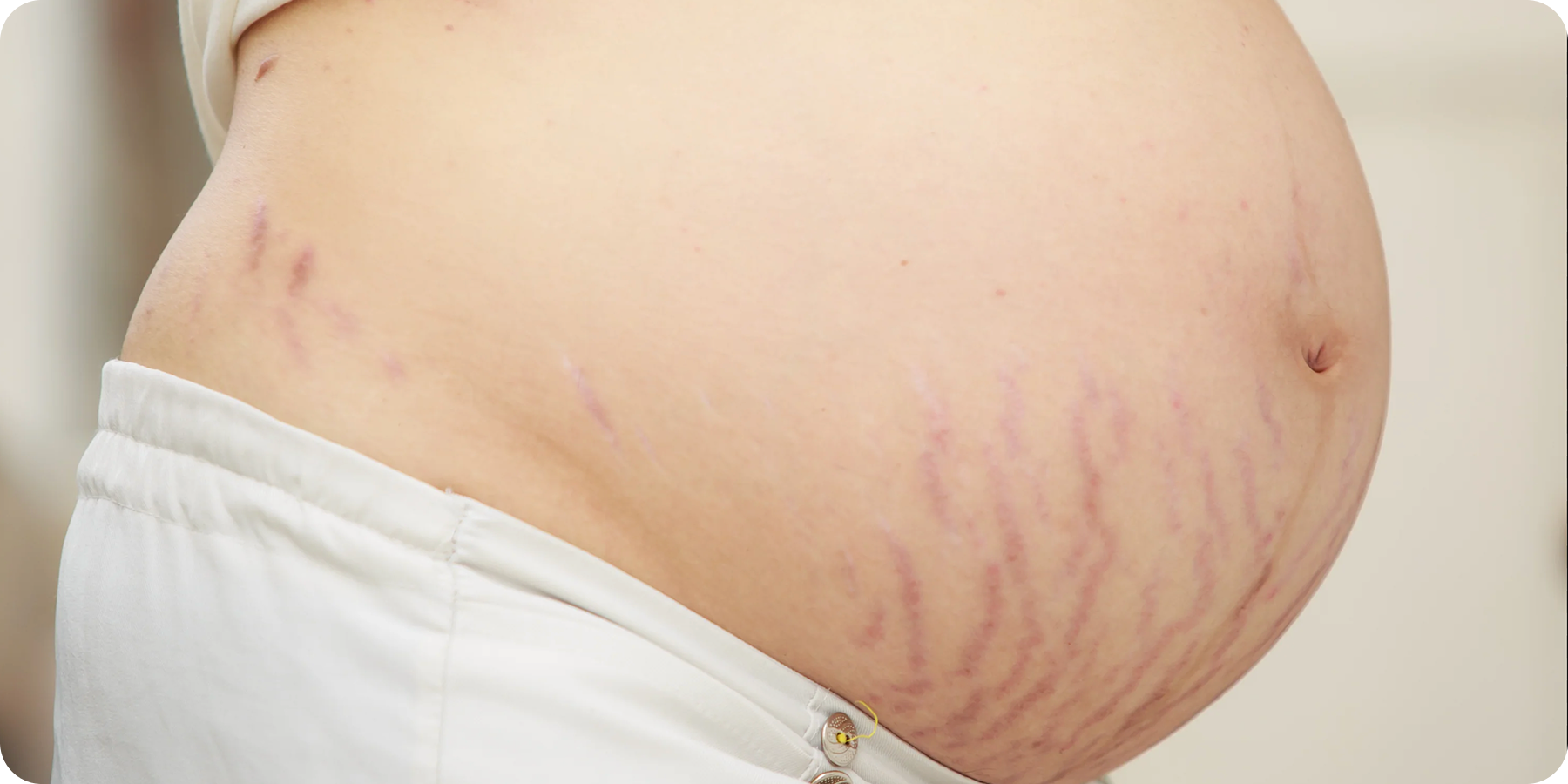
Stage 1: Early (Red or Purple – Active Phase)
This is when the stretch marks are fresh and still active. The marks appear red, purple, pink, or dark brown depending on your skin tone. Blood vessels are still functioning beneath the surface, which means this is the best time to start treatment.
What helps:
- Hydration—drink water and use natural oils like rosehip or almond externally
- Vitamin C—eat citrus, berries, and peppers to support collagen production
- Begin deep core breathing—diaphragmatic breathing reduces internal pressure on the skin
Why it matters:
This is your best opportunity to reduce long-term visibility and prevent deeper damage to the skin’s structure
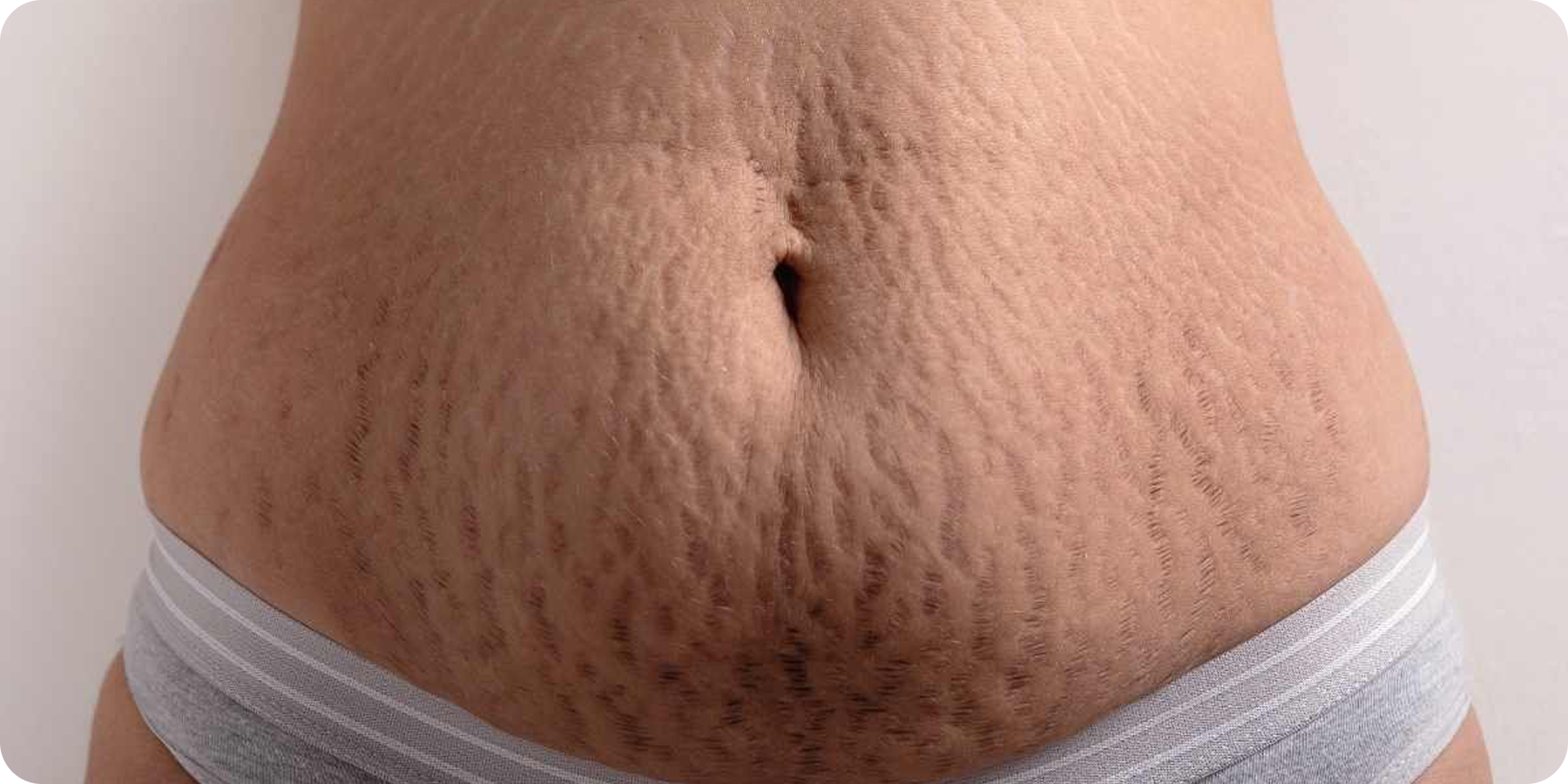
Stage 2: Mid (Fading—Collagen Breakdown Begins)
At this stage, the inflammation is gone. The stretch marks begin to lose their color and turn lighter or silvery. The pigment fades, but the tissue has now thinned, and the collagen structure has been disrupted.
What helps:
- Vitamin E — get it from spinach, sunflower seeds, and avocado
- Omega-3s—
- found in flaxseed, salmon, and chia to support skin repair
- Strength training—
- focus on core and glutes to improve tension and skin elasticity
Why it matters:
Even after they fade, the skin can still respond to movement and nutrition. Strength training improves blood flow and texture from below the surface
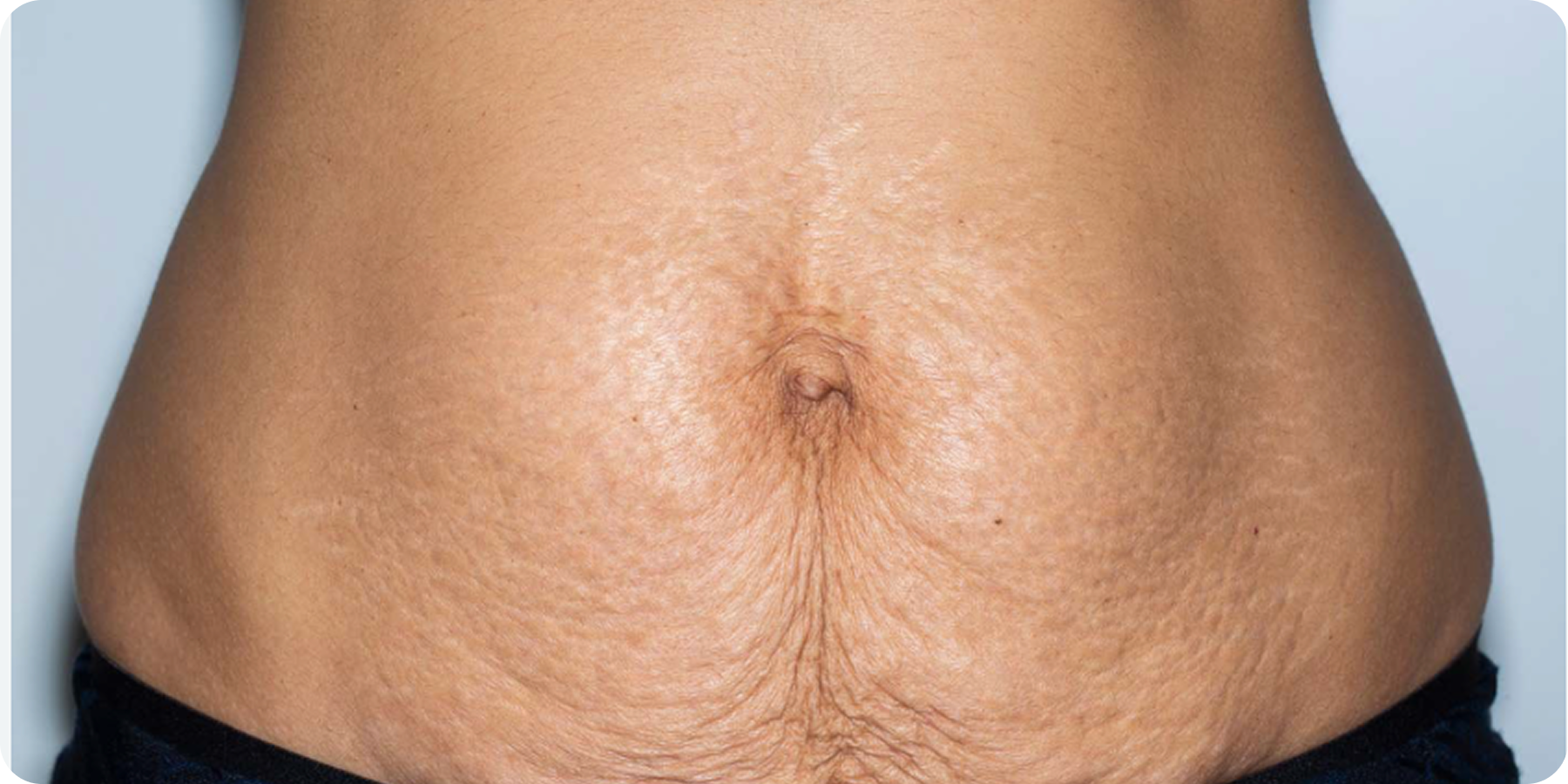
Stage 3: Mature (White or Textured—Long-Term Marks)
These are long-standing stretch marks. They appear silvery, white, or the same color as your skin and often feel slightly indented. The scar is no longer inflamed, and the pigment is gone. At this point, collagen has fully broken down in the area.
What helps:
- Dry brushing and massage stimulate blood flow to the tissue
- Postural and alignment work
- reduces sagging and supports skin integrity
-
Deep core and pelvic floor exercises – strengthen the connective tissue beneath the skin
Why it matters:
Even if the marks are old, you can still improve how they look and feel by focusing on the layers beneath them. Skin texture and firmness can absolutely improve with circulation and muscle tone

Final Thought
You’ve already done the hard part. You brought life into the world. Now it’s time to rebuild the
body that carried it.
You can strengthen your core.
You can improve your skin.
You can feel good in your body again.
Start today with my Deep Core Healing Guide on YouTube. It’s your first step. Then join my Postpartum App for full workouts, nutrition guidance, and access to the number one
mom community focused on real results and real support.
You don’t have to figure this out alone.
And you’re not stuck with how things look today.